Therapeutic silencing of Tmprss6 reduces iron-induced inflammation and prolongs survival in MDS mice
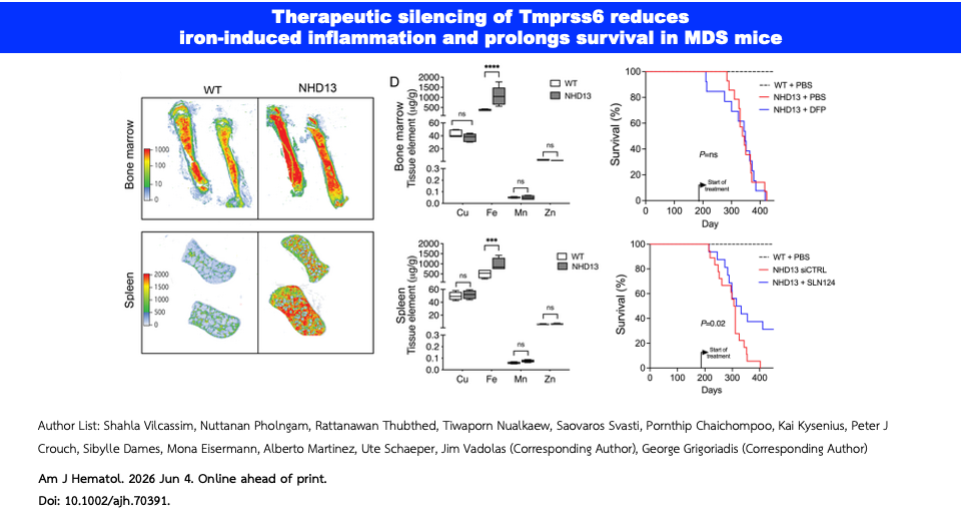
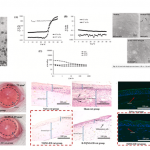
Myelodysplastic syndromes (MDS) are a group of disorders in which the bone marrow fails to produce myeloid lineage such as neutrophils and red blood cells, leading to anemia, infections, and bleeding complications. In some patients, MDS can progress to acute myeloid leukemia (AML). Although current treatments can help manage symptoms, there are limited options that can slow disease progression. Iron overload contributes to disease worsening by promoting inflammation and cellular damage. However, the mechanisms linking excess iron to MDS progression are not fully understood. In this study, we investigated whether reducing iron overload by targeting TMPRSS6, a key regulator of iron metabolism, could improve disease outcomes in MDS mouse model. We used SLN124, a small interfering RNA designed to suppress TMPRSS6 and increase the body’s natural production of hepcidin, the hormone that controls iron balance. Excess iron was strongly associated with inflammatory activation in blood-forming cells. Treatment with SLN124 reduced iron accumulation and inflammation more effectively than the iron-chelating drug deferiprone. Importantly, long-term SLN124 treatment delayed disease progression and significantly improved survival. While all untreated and deferiprone-treated mice died before Day 420, approximately 30% of SLN124-treated mice survived beyond 450 days. These findings suggest that targeting TMPRSS6 may represent a promising disease-modifying strategy for MDS.