Skin anti-aging and wound healing effects of a passion fruit seed extract rich in piceatannol

Goals 3
Ensure healthy lives and promote well-being for all at all ages

Skin anti-aging and wound healing effects of a passion fruit seed extract rich in piceatannol

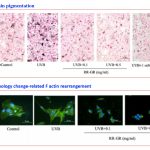
UVB radiation accelerates skin aging by increasing cellular oxidants, leading to senescence and excess production of MMP-1, which causes wrinkles and delays wound healing. Passion fruit seeds (PFS) are rich in piceatannol (PCT), known for its antioxidant and anti-aging properties.

This study examined the effects of PFS extract on UVB-exposed skin cells (HaCaT). The extract, rich in PCT, reduced cellular oxidants, decreased senescence, and lowered MMP-1 production at both protein and mRNA levels.

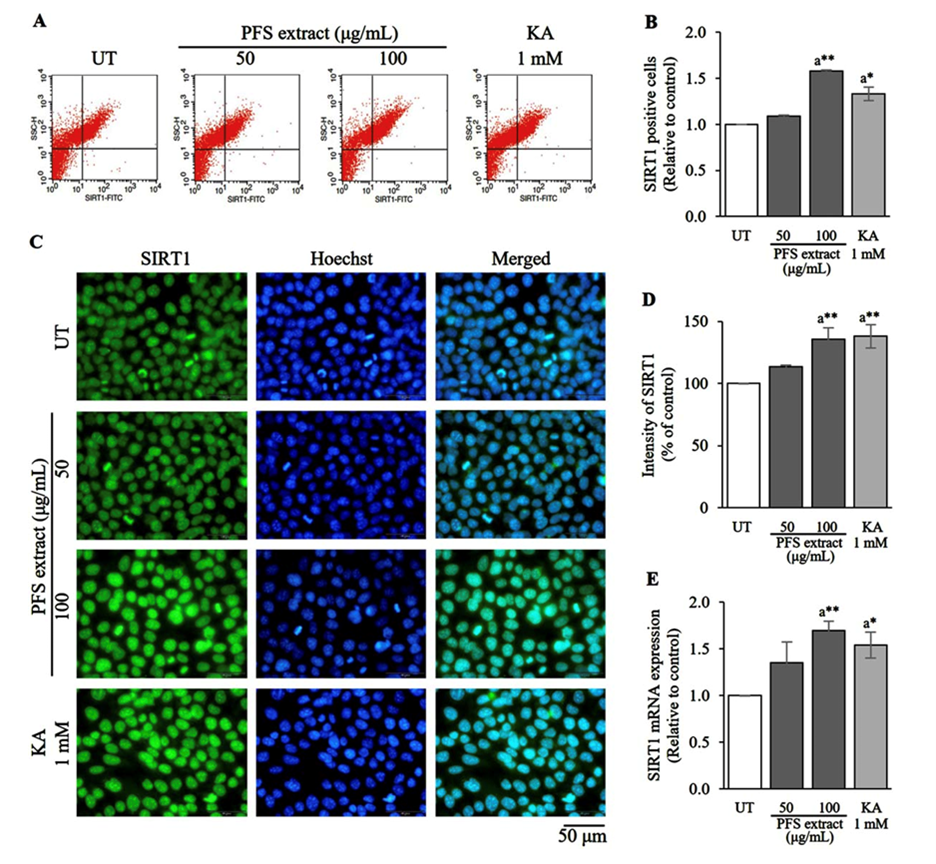
It also promoted wound healing by enhancing cell migration and increasing EGFR mRNA expression. Additionally, SIRT1 production, associated with cellular rejuvenation, was boosted.

In conclusion, PFS extract shows promise for skincare and wound healing by reducing skin aging effects and supporting tissue repair.

Related Topics

Role of Oxidative Stress-Dependent C/EBPβ Expression on CAF Transformation Inducing HCT116 Colorectal Cancer Cell Progression; Migration and Invasion

Goals 3
Ensure healthy lives and promote well-being for all at all ages

Role of Oxidative Stress-Dependent C/EBPβ Expression on CAF Transformation Inducing HCT116 Colorectal Cancer Cell Progression; Migration and Invasion

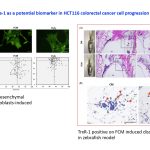
Previous studies show that cancer-associated fibroblasts (CAFs) help cancer grow and spread, affecting patient outcomes. To develop better treatments, it’s crucial to understand how fibroblasts (FBs) turn into CAFs. The tumor microenvironment (TME) is like a chronic wound with ongoing inflammation, so FB activation in CAFs might be similar to FB activation in chronic inflammation. We suspected that the C/EBPβ protein, which increases in FBs during chronic inflammation, might also play a role in FB activation into CAFs.

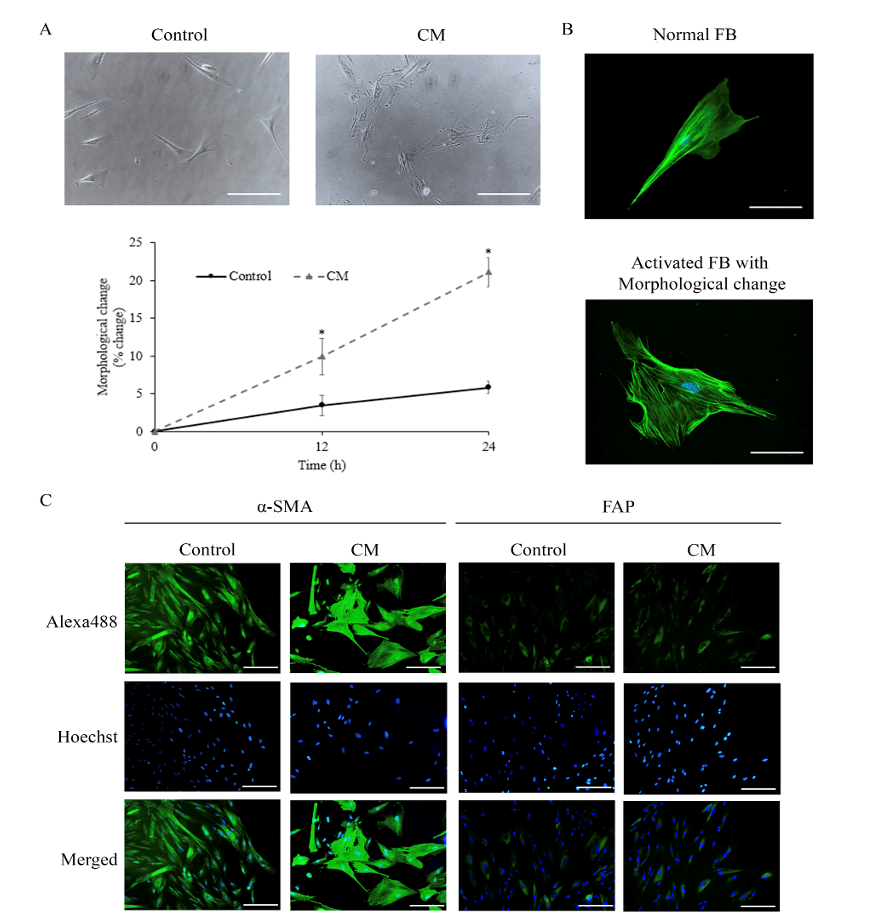
This study aimed to explore the role of C/EBPβ in oxidative stress-related CAF transformation and its impact on colorectal cancer (CRC) progression. We used conditioned media (CM) from HCT116 CRC cells to activate CCD-18Co colon fibroblasts and assessed their ability to support HCT116 growth and spread using various assays. We also studied changes in the cytokine profile and oxidative stress of activated FBs.

Results showed that CM from HCT116 cells induced oxidative stress, changes in cytokine profile, CAF markers, and C/EBPβ expression in activated FBs. When oxidative stress was reduced, FAP and C/EBPβ expression decreased, and the FBs’ ability to support cancer progression was impaired. High C/EBPβ expression was linked to poor prognosis in CRC patients.

In conclusion, C/EBPβ plays a role in CAF transformation related to oxidative stress and could be a target for improving treatment outcomes in aggressive CRC.

Related Topics

Formulation development of thermoresponsive quercetin nanoemulgels and in vitro investigation of their inhibitory activity on vascular endothelial growth factor-A inducing neovascularization from the retinal pigment epithelial cells

Goals 3
Ensure healthy lives and promote well-being for all at all ages

Formulation development of thermoresponsive quercetin nanoemulgels and in vitro investigation of their inhibitory activity on vascular endothelial growth factor-A inducing neovascularization from the retinal pigment epithelial cells

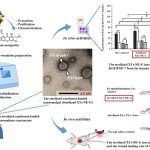
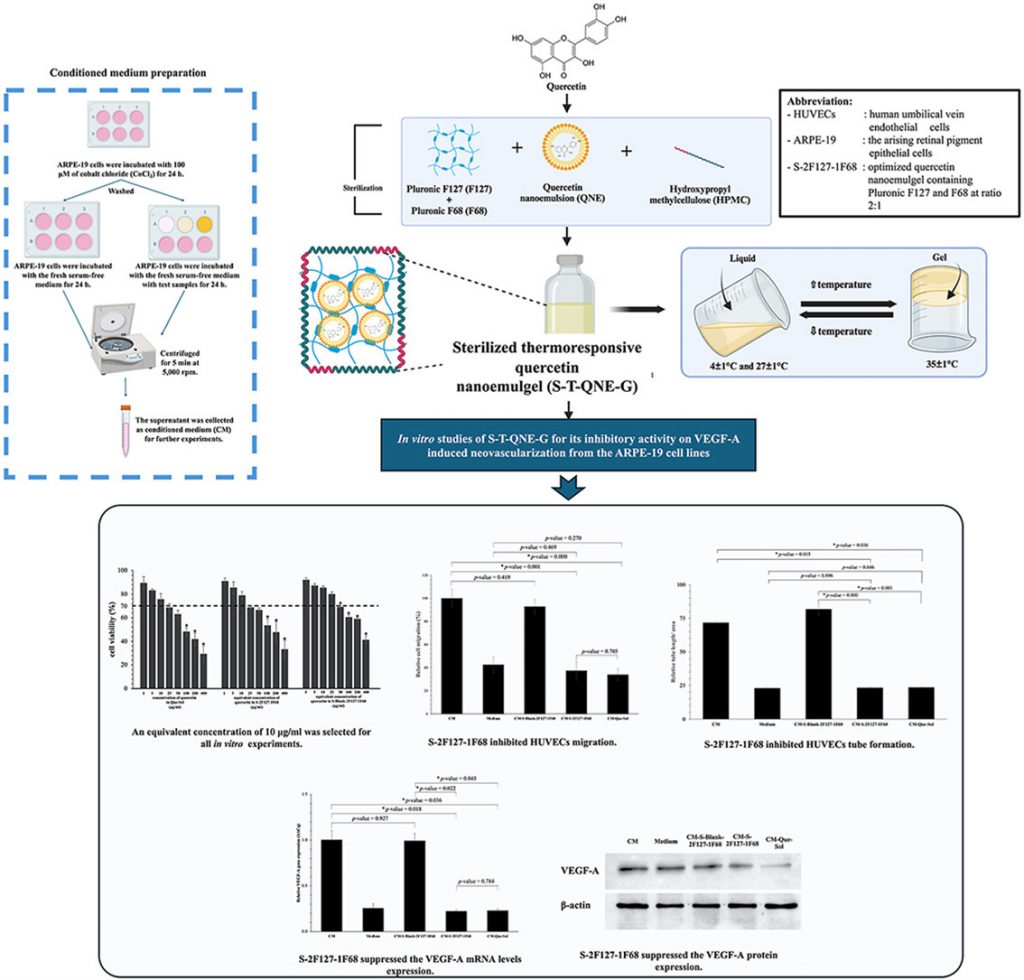
Quercetin is a natural plant that can help prevent the growth of new blood vessels, which is a common problem in certain eye diseases and cancers. This effect is due to quercetin’s ability to block the activity of a protein called VEGF-A, which plays a key role in promoting blood vessel growth. However, quercetin doesn’t dissolve well in water, making it difficult to deliver effectively to the eye. To address this, researchers developed a new, temperature-sensitive gel formulation, called T-QNE-G, that can carry quercetin and be injected into the eye.

This gel stays liquid at room temperature, making it easy to inject, and then turns into a gel at body temperature, allowing it to stay in place within the eye. The results showed the optimized gel (S–2F127–1F68) was able to reduce the movement and formation of blood vessels in human eye cells and reduce VEGF-A activity. This suggests that S–2F127–1F68 could be a promising treatment for eye diseases that involve abnormal blood vessel growth. Further testing in animal models will help determine its effectiveness and safety for future treatments.

Related Topics

Piceatannol-rich extract from Passiflora edulis Sims seeds attenuates morphological differentiation through the reduction of MITF mRNA expression and F-actin polymerization in UVB-induced hyperpigmented B16F10 cells

Goals 3
Ensure healthy lives and promote well-being for all at all ages

Piceatannol-rich extract from Passiflora edulis Sims seeds attenuates morphological differentiation through the reduction of MITF mRNA expression and F-actin polymerization in UVB-induced hyperpigmented B16F10 cells

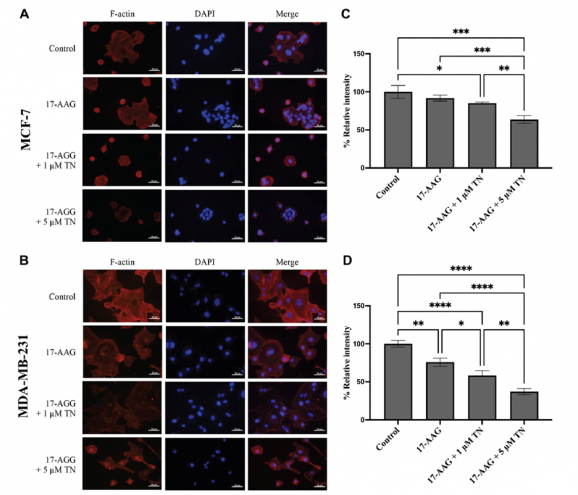
Ultraviolet B (UVB) irradiation causes skin problems by increasing cellular oxidants, melanogenesis, and morphological changes in melanocytes. Piceatannol (PCT), a phytochemical found in Passiflora edulis fruit seed (PFS), is known for its anti-melanogenesis effects. However, its effect on morphological differentiation related to melanin production had not been studied. This research investigated the impact of PFS extract on inhibiting morphological differentiation, focusing on microphthalmia-associated transcription factor (MITF) mRNA expression and F-actin polymerization in UVB-induced hyperpigmented B16F10 cells.

Three fractions of PFS extract were analyzed for total phenolics, PCT proportion, and antioxidant capacity. The fraction with the highest PCT proportion and antioxidant activity (PFS-F3) was studied for its effects on cellular oxidants, melanin-containing cells, melanin content, MITF mRNA expression, and tyrosinase activity. Additionally, morphological differentiation and F-actin polymerization were analyzed. Results showed that PFS-F3 had the highest antioxidant effect and reduced cellular oxidants, melanin-containing cells, melanin content, MITF mRNA expression, and tyrosinase activity. It also repressed differentiation and F-actin polymerization in UVB-irradiated cells.

In conclusion, PFS extract rich in PCT attenuated morphological differentiation by suppressing MITF mRNA functions and F-actin polymerization, reducing melanin production.

Related Topics

A Novel’s Evidence of MSG-Induced Craniofacial Defects in Chick Embryo Models

Goals 2
End hunger, achieve food security and improved nutrition and promote sustainable agriculture

A Novel’s Evidence of MSG-Induced Craniofacial Defects in Chick Embryo Models

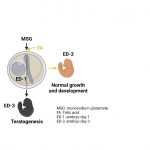
Monosodium glutamate (MSG), a common food additive, has been linked to harmful effects on developing embryos. This study aimed to explore how MSG affects the development of facial structures in chick embryos. The present study used 180 fertilized eggs, dividing them into two groups: one group received MSG, and the other did not (the control group). The embryos were studied at three stages of development. The study examined the shape and structure of the craniofacial area (head and face) under a microscope, and also looked at certain cells that play a key role in facial development.

The results showed that MSG caused several problems in the embryos. At the earliest stage, MSG led to issues like improper opening of the neural tube (a critical part of brain and spinal cord development) and eye deformities. By later stages, MSG caused facial bones to form incorrectly and delayed bone hardening. The study also found that MSG triggered the death of stem cells involved in facial development and slowed down their growth. This is the first study to report that high doses of MSG can cause serious facial deformities in embryos during development.

Related Topics